In this article
- What makes an AI agent different from a chatbot?
- How AI agents can handle daily tasks
- OpenAI, Meta and Anthropic develop personal AI assistants
- Why AI agents in everyday life matter for US readers
- Privacy and control remain unresolved
- The benefits and limits of AI agents
- Can AI agents help with everyday tasks?
- Which companies are building AI agents for everyday use?
AI agents in everyday life are moving from simple question-and-answer tools toward software that can help complete practical tasks. A Nov. 4 CNN report described technology companies developing agents for grocery shopping, package returns, vacation planning, budgeting, calendar updates and email organization.
Key Takeaways
- CNN's Nov. 4 report was a reader callout, not a formal survey of AI-agent use.
- Meta says Muse can build shopping carts from Instagram recipes, create workout plans and organize family trivia nights.
- Sensor Tower data cited by CNN reported 10 million US Muse downloads in its first 40 days.

The report was a reader callout, not a formal survey or research study. It asked people to share how they use AI agents while highlighting initiatives from OpenAI, Meta and Anthropic. The examples show the practical activities targeted by AI agents in everyday life; they do not establish how widely people use them or how reliably the tools perform.
What makes an AI agent different from a chatbot?
A chatbot generally responds to a prompt with information, suggestions or generated content. An agent is intended to go further by carrying out a task on a user’s behalf, potentially using connected services and personal information to move from advice to action.
For example, a chatbot might suggest meals for a week. An agent could, where the product and its integrations allow it, use a recipe to assemble a grocery cart. That does not mean every agent can perform every task automatically. Capabilities vary by product, connected service and the amount of approval a user must provide.
The distinction raises the standard for accuracy. An incorrect answer can be ignored or corrected in a conversation; an incorrect calendar update, purchase or email action could affect a user’s real accounts and plans. The source leaves open how individual products handle those situations.
How AI agents can handle daily tasks
The proposed role for AI agents in everyday life is broad because many ordinary responsibilities already involve several digital services. Depending on which accounts and tools it can access, a personal AI assistant could organize email, coordinate social plans, update a calendar, track a budget or support travel planning.
Shopping is one clear example. An agent might help with grocery planning or package returns, while a travel-oriented tool could help organize a vacation. Budgeting and scheduling follow a similar pattern: the system would need to understand a user’s instructions, use relevant information and then either recommend an action or take it after approval.
These uses could reduce repetitive work and help people keep personal information organized. They also depend on access to the services involved. An agent cannot update a calendar, organize an inbox or build a shopping cart unless the relevant product supports those connections and the user allows access.
Newsletter
Get the VaidikX AI Brief
The week's biggest AI, Big Tech and startup news, explained in 5 minutes. Free, every week.
OpenAI, Meta and Anthropic develop personal AI assistants
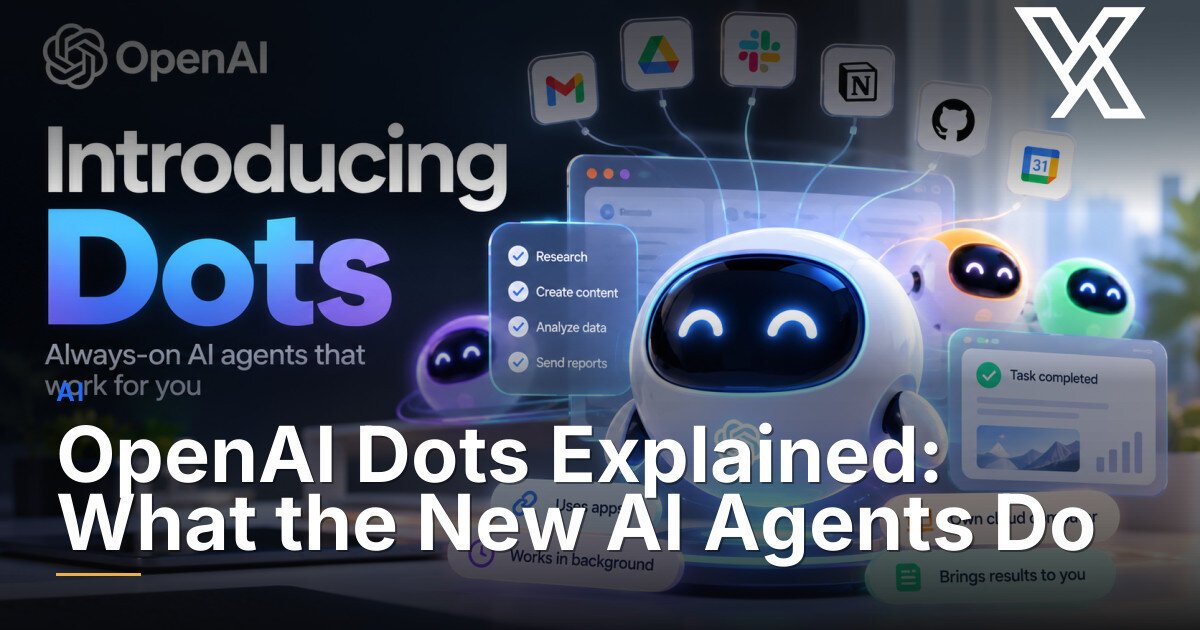
CNN’s report identified three company initiatives in the expanding agent market: OpenAI’s Dots, Meta’s Muse and Anthropic’s Claude Duet. It names these products as part of the move toward AI agents in everyday life that can support practical activities, but does not provide a full capability list for each one.
Meta has described specific uses for Muse. The company says Muse can build shopping carts from recipes shared on Instagram, create workout plans and organize family trivia nights. Those are company claims, rather than independently verified test results. They show how Meta is positioning the product around activities that combine recommendations with organization.
Sensor Tower data cited by CNN said Meta’s Muse reached 10 million downloads in the United States during its first 40 days. That is a download figure, not a measure of active users, completed tasks or user satisfaction. It also does not show that every person who downloaded Muse uses it for shopping, planning or other activities.
Why AI agents in everyday life matter for US readers
For US consumers, the immediate significance of AI agents in everyday life is practical rather than theoretical. The tools described in the report are aimed at familiar chores: assembling a grocery order, managing a schedule, sorting messages, planning a trip or keeping track of household activities.
Businesses and developers also face a change in how people may interact with online services. Instead of opening several apps and completing each step manually, a user could ask an agent to coordinate part of the process. The source does not establish that this workflow is already common, and it does not specify which US services support each product.
For now, users should treat the category as a collection of developing tools rather than one standardized technology. The meaning of AI agents in everyday life depends on whether an agent can merely suggest an action, prepare it for review or execute it directly.
Privacy and control remain unresolved
AI agents in everyday life would become more useful as they understand more about a user’s routines, preferences and commitments. That raises basic questions about how much information an agent remembers, how it reaches calendars and email, what it retains and how a user can control that information.
Giving an agent access to personal accounts also creates privacy and security concerns. A system connected to email, shopping or scheduling services may have an opportunity to affect information beyond the original conversation. The source does not provide specific data policies for Dots, Muse or Claude Duet, so it would be inaccurate to assume that all three handle retention, permissions or account access in the same way.
Users also need to know what happens when an agent makes a mistake. Approval steps may limit the damage from an incorrect action, but the source does not state how much confirmation any named product requires. That uncertainty is central to evaluating AI agents for daily tasks: convenience depends on automation, while trust depends on visibility and control.
The benefits and limits of AI agents
The appeal of AI agents in everyday life is clear. Repetitive work can consume time, and a tool that combines planning with action could help users organize several responsibilities from one interface. Possible gains include less manual coordination, easier personal planning and assistance with routine tasks.
The trade-offs are equally direct. AI agents in everyday life may perform an incorrect action, require user approval at key points or depend on integrations that are unavailable. Users must also decide how much personal information to share and which accounts to connect.
CNN’s callout points to a transition in consumer AI, but it does not prove that a single personal assistant can reliably run a person’s life. The narrower takeaway is that companies are building toward task-oriented software, while products such as Meta Muse are being presented as tools for activities beyond conversation. Readers can review the original CNN report on how people are using AI agents while keeping the reported claims, download data and unanswered privacy questions separate.
Can AI agents help with everyday tasks?
AI agents are moving from simple question-and-answer tools toward software that can help complete practical tasks, such as planning groceries, handling package returns, or organizing a trip.
Which companies are building AI agents for everyday use?
Meta’s Muse is one example covered here, and the article also looks at initiatives from OpenAI and Anthropic.
Get the VaidikX AI Brief, free
More from VaidikX