
In this article
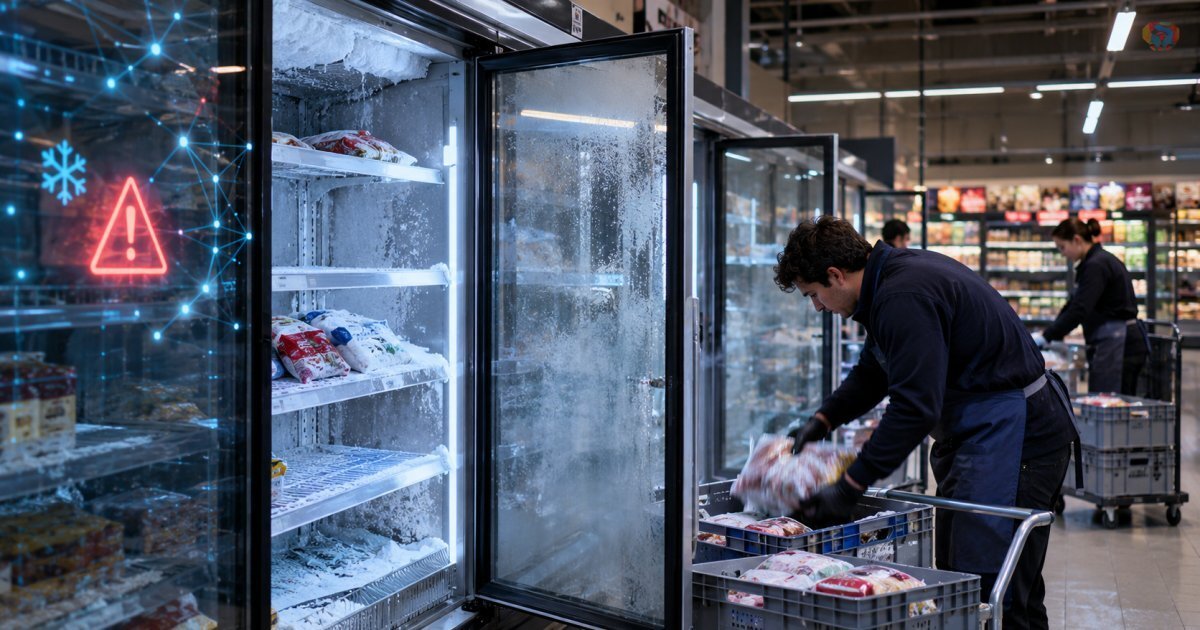
A supermarket cyberattack disrupted refrigeration systems across at least seven European countries on Monday, Nov. 2, 2026, sending refrigerator and freezer temperatures sharply higher. Stores in Belgium, Estonia, Ireland, Finland, Luxembourg, the Netherlands and Sweden reported problems, and some retailers said the cause was a cyberattack. Reports across 7 countries in total make this supermarket cyberattack a wide-reaching problem.
Key Takeaways
- Refrigeration problems were reported in at least seven European countries, including Belgium, Sweden, Ireland and Luxembourg.
- Swedish and Estonian stores reportedly had freezer temperatures raised to 50°C.
- The incidents followed a French attack that affected as many as 700 supermarkets and caused major food losses.
The incidents show how internet-connected equipment can turn a routine retail system into an operational risk. If attackers reach refrigeration controllers, stores can face spoiled food, closed departments, emergency repairs and financial losses without any customer data being stolen or ransom being demanded. The reports follow a suspected attack in France last month that affected as many as 700 supermarkets.
The reported European supermarket refrigeration incidents remain under investigation. The people or group behind them have not been identified, and authorities have not publicly attributed the attacks to any country or government. Officials have not said whether the supermarket cyberattack in one country is linked to the others.
What happened in the latest supermarket cyberattack
Several retail chains said cooling equipment had been altered or stopped working overnight. In Sweden, Coop told the newspaper Aftonbladet that six stores were affected. ICA said a limited number of its stores experienced an incident affecting refrigeration and freezer systems. For shoppers, a supermarket cyberattack can mean empty chilled aisles even when no customer data is stolen.
An ICA location in Sjöbo, southern Sweden, reportedly posted that its refrigeration equipment had been hacked and set to 50°C, or 122°F. A Stockholm store said its freezers had been damaged in a 2 a.m. cyberattack and that its stock had been destroyed. Those store-level accounts describe the impact, but they do not establish who carried out the attack or how the systems were entered.
In Belgium and Luxembourg, Ahold Delhaize said refrigeration equipment in dozens of supermarkets had been affected. A store north-east of Brussels displayed a notice saying refrigerated and frozen products were unavailable because of cyberattacks. The company said the range of fresh and frozen products in affected stores was temporarily reduced, while distribution centers and deliveries continued normally. Ahold Delhaize’s statements show how quickly one supermarket cyberattack can spread across a group of stores.
Other Belgian operators also reported disruption. Colruyt said five stores had technical problems affecting refrigerators, while Intermarché reported problems at 15 stores. Carrefour Belgium said about 15 of its 700 stores were affected, and a spokesperson described the incident as a cyberattack. Ikea Belgium said a freezer-temperature incident at its Mons store was caused by a cyberattack and that some products had been removed as a precaution. Shoppers may notice the effect of a supermarket cyberattack most in chilled and frozen aisles.
Reports from elsewhere widened the geographic scope. Finnish media said Kesko stores were investigating similar problems, while Dutch public radio reported that at least 17 mainly small local stores had been affected. In Estonia, a computer controlling refrigeration at one Selver supermarket was reportedly accessed and used to raise the temperature to 50°C. The refrigeration company involved said the response came within minutes and caused no significant damage. Ireland’s SuperValu said a specific refrigeration-system model had been affected in 13 of its 223 stores, and chilled and frozen products were removed from sale. A supermarket cyberattack on cooling systems is as much a physical risk as an IT problem.
Why connected refrigeration creates a supermarket cyberattack risk
Modern refrigeration equipment can be monitored and controlled remotely. That helps operators manage large numbers of freezers, refrigerators and chillers, but it also creates another route into equipment that controls physical operations. That link is why a supermarket cyberattack can reach store shelves so quickly.
These systems are part of what cybersecurity professionals call operational technology: computers and controllers that operate physical equipment rather than simply storing or displaying information. An intrusion into a refrigeration controller can change a real-world setting, such as switching an evaporator into defrost mode or raising a freezer’s temperature. Protecting these systems is central to defending against a supermarket cyberattack.
In Belgium, Stephan Moelans, chief executive of Sabcobel, which operates Delhaize’s refrigeration systems, said technicians began disconnecting affected installations at 1 a.m. Another Sabcobel account said the units’ evaporators had been switched to defrost mode. These details show how a small number of commands can have immediate physical consequences, although the source does not establish the full intrusion method.
Sweden’s national cybersecurity center chief, John Billow, said the country had “quite a lot of exposed operational technology devices” that needed updating or patching. Cybersecurity executives cited in the report said many refrigeration systems still had known, unfixed flaws and that some controllers remained reachable from the internet after the French incident.
Newsletter
Get the VaidikX AI Brief
The week's biggest AI, Big Tech and startup news, explained in 5 minutes. Free, every week.
The French attack provides a troubling comparison
The latest incidents resemble an attack in France during the previous month. Hackers reportedly took control of cooling equipment at as many as 700 supermarkets, pushing settings from as low as -27°C to above 50°C. Chains named in connection with that incident included Intermarché, Coopérative U, Carrefour, Leclerc and Monoprix.
French stores discarded large amounts of fresh meat, dairy products and frozen food. Reported losses ranged from tens of thousands of euros at individual supermarkets to more than €130,000, while overall damage was estimated in the tens of millions of euros. Some stores also experienced fires and operational disruption.
The French investigation is being handled by the Paris prosecutor’s office, while France’s national cybersecurity agency, Anssi, was asked to examine the incident. The agency later said controllers from two other companies had also been targeted. Authorities have not said who was responsible, and there have been no claims of responsibility.
Why the supermarket cyberattack matters for US readers
No US store is identified in the source’s reports. The disruption described here is European, but the underlying exposure is relevant to any retailer operating large numbers of remotely managed physical systems. Refrigeration controllers sit alongside other retail technology, including building-management equipment, door-access systems and point-of-sale infrastructure, creating a broad environment that businesses must secure.
The practical lesson is that cybersecurity cannot be limited to laptops, payment systems and customer accounts. A retailer may avoid a data breach yet still face serious losses if an attacker can alter equipment protecting inventory. Removing products from sale is also a safety measure: once temperatures rise beyond safe operating conditions, stores may have to discard food rather than return it to shelves.
What retailers need to clarify next
Retailers have not provided a common explanation for the incidents, and the source does not identify a single technical vulnerability or intrusion path. It is also unclear whether the European events were coordinated, whether they share the same perpetrators, or whether every reported refrigeration failure was caused by the same type of attack.
The reported response has included disconnecting affected equipment, mobilizing technicians, removing food from sale and reviewing exposed systems. The incidents also underline the importance of patching operational technology, limiting unnecessary internet access and treating remote-maintenance pathways as part of the core security perimeter. Those are security principles supported by the reported concerns about unpatched and externally reachable controllers, rather than proof that any particular retailer failed to apply them.
The immediate cost of a supermarket cyberattack can be seen in empty freezer cases and wasted inventory. The broader warning is that systems designed to make physical operations easier to monitor can also give attackers a fast route to physical disruption. Refrigeration may look like an unlikely target, but exposed controllers can turn a technical intrusion into a store-level crisis.
Source: the Guardian
More from VaidikX