

In this article
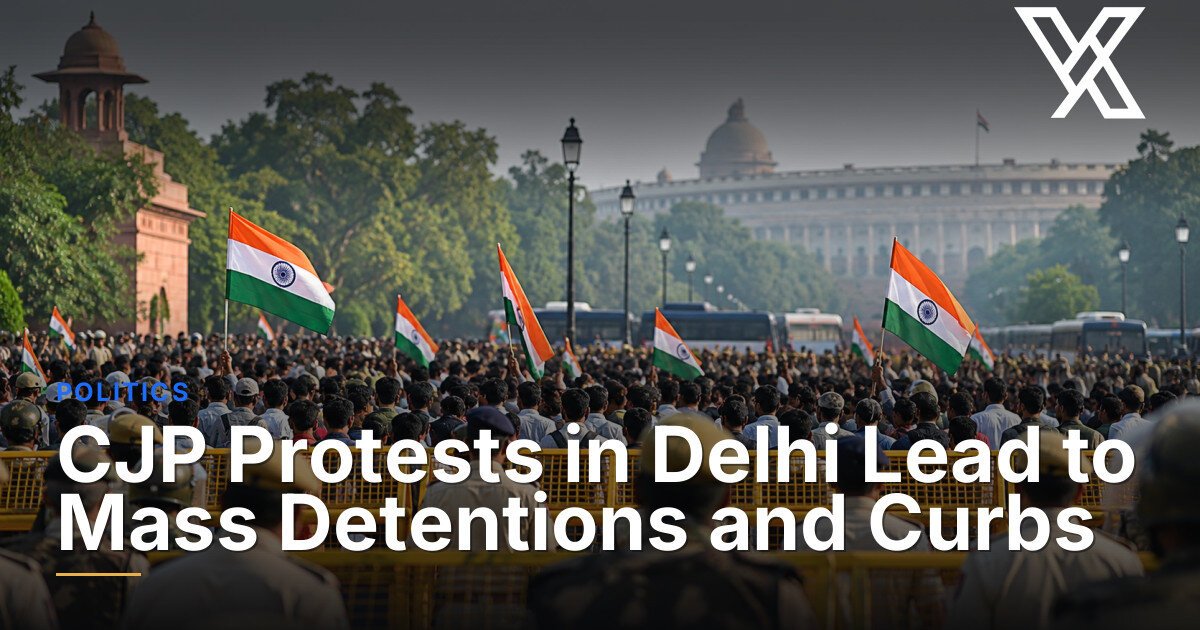
CJP protests in Delhi on October 10, 2026, led to mass detentions, roadblocks and restrictions around planned demonstrations against Chief Election Commissioner Gyanesh Kumar and the Special Intensive Revision (SIR) of electoral rolls. The Hindu reported that Delhi Police detained more than 5,000 protesters by 2 p.m., while a separate live update put the number at 3,300, reflecting changing figures during the day.
The demonstrations were called by the Cockroach Janata Party (CJP), student groups and Left organisations. Police had denied permission for the Jantar Mantar gathering, and the resulting action affected protesters, political leaders, lawyers, students and movement across parts of Delhi. Similar detentions were reported in Mumbai and Bengaluru.
Why the CJP protests in Delhi were organised
The protesters were demanding the resignation of Chief Election Commissioner Gyanesh Kumar and the withdrawal of the SIR process for electoral rolls. The available reporting presents these as political demands and allegations from the organisers and opposition figures; it does not establish that electoral irregularities occurred.
SIR refers to a review of voter rolls. In this protest, CJP and allied organisations connected the process to wider concerns about election administration and democratic accountability. The report does not provide the Election Commission’s detailed response to those allegations.
Detentions began before the main gathering
Delhi Police detained CJP founder Abhijeet Dipke and other leaders, including Saurav Das and Ashutosh Ranka, after they arrived in Delhi. The CJP said its youth protest would continue without its leadership.
AISA leader Neha Bora announced that protesters would continue at Dilli Haat, but police blocked the road and detained her and other activists. The market was later shut, and shoppers were asked to leave while small groups of protesters were dispersed, according to the live report.
The report also said former Kerala Chief Minister Pinarayi Vijayan and Rajya Sabha member John Brittas were detained. Around 50 to 60 lawyers who marched from the Supreme Court towards Jantar Mantar were detained earlier, and Solicitor General Tushar Mehta told The Hindu that the Chief Justice of India intervened with authorities for their release.
Police deployment and restrictions across the capital
Sources in Delhi Police said around 14,000 personnel were deployed, including 10,000 men and 4,000 women. The deployment included Delhi Police, Central Armed Police Forces and forces from Uttar Pradesh, Haryana and Rajasthan.
The Hindu reported that security forces blocked access to Jantar Mantar and diverted buses carrying detainees to Chhatrasal Stadium. It also reported continued transport restrictions in Delhi and a contempt plea in the Supreme Court over the shutdown. These measures turned a planned protest into a wider disruption for residents and visitors in affected areas.
Security agencies, including Delhi Police, also ordered the removal of more than 50 social-media posts that sources described as misinformation about the protests. That figure and the stated reason were attributed to intelligence-agency sources, not presented as an independent finding by the report.
Claims of mistreatment remain disputed
Several groups made allegations about how protesters were handled. The Students’ Federation of India alleged that people attacking protesters were not wearing name tags. AISA said the phones of its president Neha and activist Nirma were taken at a detention centre and alleged that lawyers were not being allowed to meet them.
The report also described allegations of police abuse in videos posted by SFI leader Aishe Ghosh, an assault involving protesters in Connaught Place, and injuries reported by members of the Youth Organisation Revolutionary Workers’ Party of India at Rajghat. These accounts were attributed to the people or organisations making them and were not independently verified in the available report.
In Mumbai, police detained protesters at August Kranti Maidan, including a woman whom the report said was placed in a police van. In Bengaluru, at least 50 AISA students were detained at Freedom Park while protesting against SIR and demanding the CEC’s resignation. The students said they had been protesting peacefully at the designated site.
What happens next for the protest movement
CJP, SFI and AISF representatives were scheduled to address a press conference at HKS Surjeet Bhawan at 5 p.m. on October 10. The CJP also launched a form to collect reports of what it described as unlawful detentions.
Rahul Gandhi urged young people to continue protesting in a video posted on X. Priyanka Gandhi Vadra separately argued that the detentions showed the government feared scrutiny over alleged election-related wrongdoing. Those are political statements, not verified findings about the conduct of elections.
The immediate facts are clearer than the competing political interpretations: the protest was denied permission in Delhi, thousands were detained according to police-linked reporting, and organisers continued to demand action against the CEC and withdrawal of SIR. The available account does not resolve the underlying claims about electoral irregularities or provide a final official explanation for every detention.
For a chronological account of the day’s developments, read The Hindu’s live coverage of the anti-CEC protests.