In this article
Donald Trump 2028 speculation returned to the center of US politics in August after the president said he would like to run again while acknowledging that the law is “very strong” against it. Trump has not formally announced a legally valid 2028 campaign, but his remarks and public appearances have kept open the possibility that he could try to remain in the White House beyond his current term.
Key Takeaways
- Trump said he would like to run again but acknowledged that the law against a third term is very strong.
- The 22nd Amendment bars anyone from being elected president more than twice.
- Trump’s continued ambiguity may delay Republican contenders from fully organizing for the 2028 race.
The Donald Trump 2028 question matters because Trump was elected president in 2016 and again in 2024. The 22nd Amendment says no person may be elected president more than twice, creating a direct constitutional obstacle to another successful presidential election. Yet Trump has repeatedly stopped short of giving a clear “no,” leaving Republican politicians, potential successors and opponents to plan around an unresolved political possibility.
What Trump has said about a 2028 run
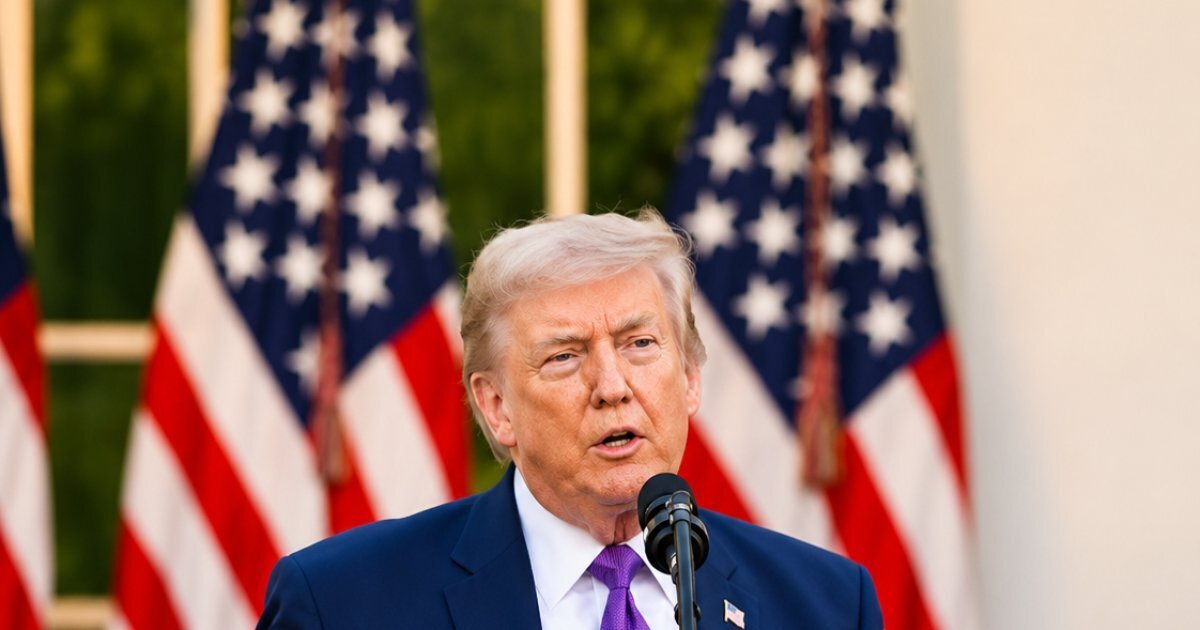
Trump addressed the question directly on Aug. 11, when CQ Roll Call asked whether he was serious about another campaign. “I’d love to run, but the law is very strong,” he said, referring to the restriction that appears to prevent him from being elected to a third presidential term.
That answer acknowledged the constitutional problem without definitively closing the door. When asked whether his statement amounted to a “no” on 2028, Trump did not provide a clear confirmation. He therefore left supporters and critics to speculate about whether his lawyers or political advisers might pursue another route.
Trump’s recent comments followed several more overt references to Donald Trump 2028. On July 22, at an event in Marietta, Georgia, he began by saying he was there to announce his candidacy, then added that he was joking. Two days later, at the White House Correspondents’ Association dinner, he said he intended to run for a “fourth term.” The source notes that Trump falsely suggested he had won three presidential elections, even though he lost the 2020 election to Joe Biden.
Trump also posted an image on Truth Social showing him wearing a “Trump 2028” cap with the words “We are going to win.” At another appearance, he said the White House ballroom he is attempting to build would be used for only a short period because his second term would have only a few months remaining by the time it was expected to be completed.
Why the 22nd Amendment creates a major barrier
The constitutional issue is straightforward at its core. The 22nd Amendment limits a president to being elected to the office no more than twice. Trump has already won two presidential elections, in 2016 and 2024, and is the only president other than Grover Cleveland to win nonconsecutive terms.
For Donald Trump 2028, the unresolved legal question is how a third-term effort could overcome that language. Steve Bannon, a former Trump campaign manager and White House chief strategist who remains an outside adviser, said in June that “we’re working on it” and that he expected “a couple of alternatives.” Bannon also questioned the definition of a term limit, but the source does not identify a specific legal mechanism that would make another Trump election permissible.
That distinction matters. Discussing a possible workaround, suggesting that lawyers may find an alternative, or wearing a campaign hat is not the same as establishing a lawful candidacy. Legal scholars cited by Roll Call generally described the idea as unlikely to survive serious constitutional review. UCLA law professor Rick Hasen said he did not take Trump’s teases seriously and predicted the real answer would become clearer after the midterms, when potential candidates begin deciding whether to run.
Newsletter
Get the VaidikX AI Brief
The week's biggest AI, Big Tech and startup news, explained in 5 minutes. Free, every week.
Why Donald Trump 2028 affects the Republican field
The Donald Trump 2028 question has consequences even without a formal campaign. After a president’s midterm elections, members of the governing party typically begin positioning themselves for the next presidential contest by raising money, seeking endorsements and building support among elected officials, party figures and other influential groups.
Those preparations are harder when the current president keeps suggesting that he might remain the party’s future nominee. University of North Carolina law professor Michael Gerhardt compared Trump’s approach with Franklin Roosevelt’s handling of the 1940 third-term question. Gerhardt said Roosevelt’s repeated hedging discouraged other Democrats from entering the race and argued that Trump’s continued discussion of 2028 could similarly leave potential Republican candidates waiting.
Trump had appeared at times to accept that another Republican would be the party’s 2028 nominee. During one Cabinet meeting, he suggested that the contest could involve Vice President JD Vance and Secretary of State Marco Rubio, both former Republican senators. His return to Donald Trump 2028 messaging has made the succession question less settled.
What remains political rhetoric rather than a candidacy
The Donald Trump 2028 discussion has several possible explanations in the source without resolving his private intentions. Some aides later characterized the White House Correspondents’ Association dinner remarks as a joke. Gerhardt said Trump may be deliberately creating confusion and uncertainty, while other legal scholars treated the comments as empty threats that would not withstand constitutional analysis.
Trump’s history also explains why some observers are reluctant to dismiss the language entirely. Roll Call notes that he did not clearly state in 2020 and early 2021 that he would do everything possible to ensure a peaceful transfer of power. He later pressured election officials to find additional votes and encouraged supporters who stormed the Capitol on Jan. 6, 2021, temporarily interrupting Congress’s certification of Biden’s Electoral College victory.
Those events do not establish that Trump will attempt an unlawful 2028 campaign. They do explain why comments that might otherwise be treated as political teasing receive sustained attention from opponents, scholars and members of his own party.
Why the November midterms may clarify the succession fight
The next major political checkpoint is the November midterm election. The source says Democrats have warned that Trump’s team could try to influence coming elections, beginning with the midterms, but it does not provide evidence of a specific 2028 strategy or a confirmed effort to bypass the 22nd Amendment.
The Donald Trump 2028 debate may nevertheless shape the Republican conversation. Hasen said potential candidates would begin making decisions soon afterward, and Trump’s standing within the party could affect how willing other Republicans are to challenge his preferred direction. A president who keeps the 2028 question open can make rivals reluctant to organize openly, especially if they do not want to provoke him or lose access to his supporters.
For now, Donald Trump 2028 remains a political discussion rather than an announced, legally established candidacy. Trump has acknowledged that the law presents a strong obstacle, advisers have hinted at possible alternatives without detailing one, and legal scholars cited by Roll Call doubt that a third-term effort could prevail. The immediate effect is less a new campaign than continued uncertainty over who can realistically begin the Republican race for 2028.
For the full account of Trump’s remarks and the legal debate, see Roll Call’s reporting on the 2028 question.
Source: Roll Call
More from VaidikX