In this article
- What Jeff Bezos said about shorter working weeks
- How AI productivity could change the amount of work
- Why Bezos expects labor shortages instead of mass unemployment
- Amazon’s job cuts complicate the optimistic forecast
- AI’s investment boom may not determine its long-term value
- Jeff Bezos three-day workweek prediction faces open questions
- What the prediction means for workers now
The Jeff Bezos three-day workweek prediction rests on a specific economic argument: artificial intelligence could raise productivity enough for some Americans to support their families while working only three days. The Amazon founder also suggested that some two-income households could choose to live on one income. He offered no timeline and announced no change to Amazon’s employment policies.
Key Takeaways
- Jeff Bezos said AI productivity could eventually let some people support their families by working three days a week.
- Bezos suggested some two-income households could choose to rely on a single income.
- Amazon has cut approximately 30,000 corporate positions since late 2025.
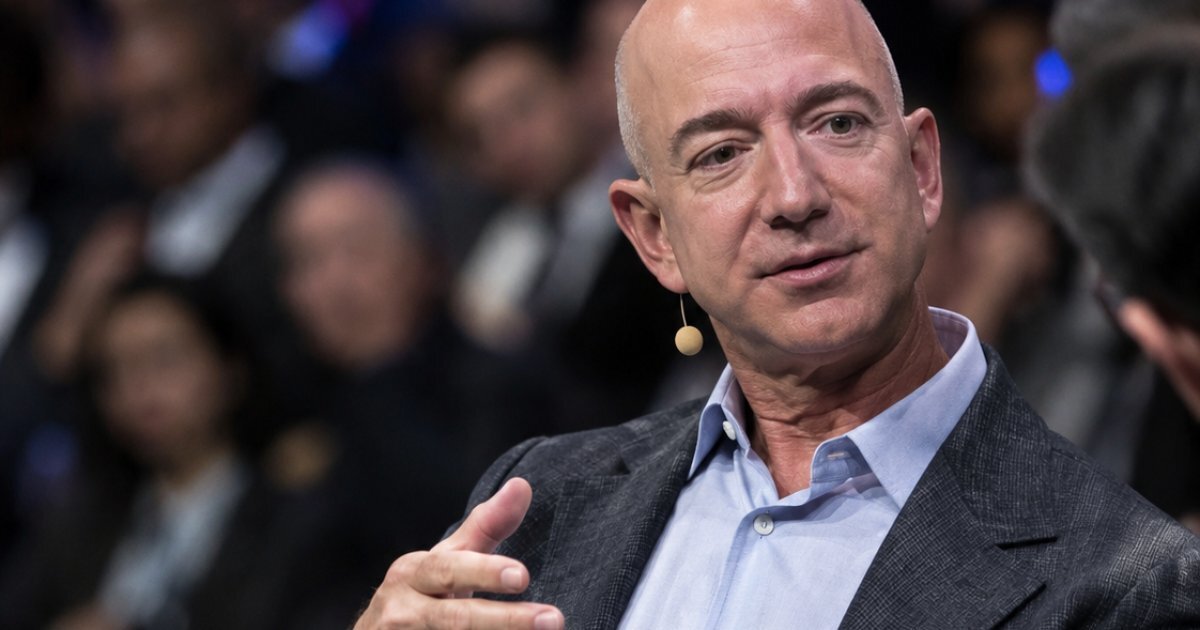
Bezos made the comments in a Fox News interview with chief political anchor Bret Baier that aired Oct. 7. His forecast comes as concerns about automation persist and Amazon cuts approximately 30,000 corporate positions since late 2025. That contrast highlights the gap between AI’s potential benefits and workers’ current uncertainty.
What Jeff Bezos said about shorter working weeks
Bezos argued that AI-driven efficiency could increase productivity across the economy, potentially enabling the Jeff Bezos three-day workweek. In practical terms, businesses may be able to produce more or complete the same work with fewer labor hours. He said those gains could allow some people to reduce their schedules without losing the ability to meet household expenses.
“Some people will also decide, you know what, I can support my family by working three days a week,” Bezos said in the interview. He also told Baier that households with two working adults might eventually decide they no longer need two incomes, while emphasizing that families could still choose for both adults to work.
This is a prediction, not a current workplace policy. Bezos did not say Amazon would introduce a Jeff Bezos three-day workweek or that its employees would soon be able to support their families on a single income. The reported interview and surrounding employment context provide no schedule for when his forecast might become possible.
How AI productivity could change the amount of work
AI systems can potentially handle repetitive administrative work, help employees complete tasks faster and reduce the time required for some professional activities. That is the basis of the Jeff Bezos three-day workweek argument: if the same economic output can be produced with less human time, some of the difference could theoretically become free time.
A worker might use an AI tool to organize information, prepare a first draft or manage routine requests that previously consumed part of every workday. That could leave more time for higher-value tasks or support discussions about a shorter schedule. This is a hypothetical illustration of the mechanism Bezos described in discussing the Jeff Bezos three-day workweek, not a report of a workplace already operating that way.
AI agents are also being developed for tasks such as shopping, package returns, planning and email, as covered in AI agents in everyday life. But faster task completion does not determine who receives the benefit. Productivity gains could appear as higher output, lower costs, higher pay, shorter hours or fewer jobs, depending on how businesses and workers divide the resulting value.
Newsletter
Get the VaidikX AI Brief
The week's biggest AI, Big Tech and startup news, explained in 5 minutes. Free, every week.
Why Bezos expects labor shortages instead of mass unemployment
Bezos disagreed with predictions that AI will necessarily cause widespread job losses. His alternative view is that a more productive economy could make people less dependent on multiple jobs or two incomes, leading some workers to choose fewer hours.
In that scenario, employers could eventually find it harder to recruit enough people because potential employees would have more flexibility and less need to accept full-time work. Bezos presented this labor shortage as a possible consequence of rising productivity, not as an established result of current AI adoption.
The competing concern is that companies may use automation to reduce the number of workers needed for particular tasks. Amazon’s restructuring shows why the debate remains unsettled: the technology may help organizations produce more with fewer resources, while the effect on employment depends on decisions made by individual companies.
Amazon’s job cuts complicate the optimistic forecast
Amazon has cut approximately 30,000 corporate positions since late 2025, including a fresh round of reductions announced in October, according to the source. Reuters reported on Oct. 8 that fewer than 1,000 white-collar positions had been eliminated in the latest round, primarily in Amazon’s Stores division, affecting employees in the United States, India and the United Kingdom.
When Baier raised the earlier reductions, Bezos attributed them to Amazon’s rapid expansion during the COVID-19 pandemic. Online shopping surged during that period, and the company significantly increased its headcount before later restructuring.
Those cuts were not presented as proof that AI caused the reductions. They do show why workers may view broad promises about AI productivity cautiously. The Jeff Bezos three-day workweek describes one possible distribution of gains, while workforce reductions show that companies can also respond to changing business conditions by cutting roles.
AI’s investment boom may not determine its long-term value
Bezos also acknowledged uncertainty over whether the AI industry is experiencing an investment bubble. A bubble occurs when financial enthusiasm and valuations rise beyond what the underlying businesses can ultimately support, creating the risk of losses when confidence falls.
His position was that useful inventions and technologies can survive even if investors lose money after a bubble bursts. That separates two questions often treated as one: whether AI companies are receiving excessive investment today, and whether AI itself can deliver lasting productivity improvements.
Even if AI proves technically valuable, that does not settle the labor question. The technology could remain useful while financial returns, employment effects and the distribution of productivity gains vary widely between businesses and workers.
Jeff Bezos three-day workweek prediction faces open questions
For the prediction to become reality, productivity gains would have to reach households in a form workers can use. That might mean higher income, fewer required hours or greater control over schedules. Bezos did not explain how companies would share those gains with employees, and the source does not identify changes to wages, employment contracts or workplace rules that would make the Jeff Bezos three-day workweek broadly available.
The effects could differ by occupation and industry. Work that can be assisted by software may see different changes from work that requires physical presence or cannot easily be automated. Income groups could experience different results as well, since the ability to reduce working hours depends on whether a household can meet its expenses with less earned income.
Bezos gave no forecast for when the Jeff Bezos three-day workweek or single-income household could become common. For now, the Jeff Bezos three-day workweek claim is best understood as an economic prediction about what sustained AI productivity might make possible, rather than a promise to workers.
What the prediction means for workers now
The immediate takeaway is not that Americans are moving to three-day schedules. It is that AI has reopened an old argument about how economic gains should be used. Bezos believes the Jeff Bezos three-day workweek could give people the option to work less and reduce dependence on multiple incomes; critics of that outlook worry that employers may capture the gains through restructuring instead.
The result will depend on adoption decisions and on whether workers receive a meaningful share of the value created. Until those questions are answered, a shorter workweek remains a possible future scenario, not a confirmed direction for Amazon or the wider labor market.
Source: The American Bazaar
This debate about the future of work and artificial intelligence productivity also raises the AI job market impact question: whether AI automation will cut jobs, change them, or give workers shorter hours. Amazon job cuts are part of that debate, since the reduction of about 30,000 corporate positions shows that the AI job market impact can look different from the optimistic forecast. See the story version of this article.
Get the VaidikX AI Brief, free
More from VaidikX