

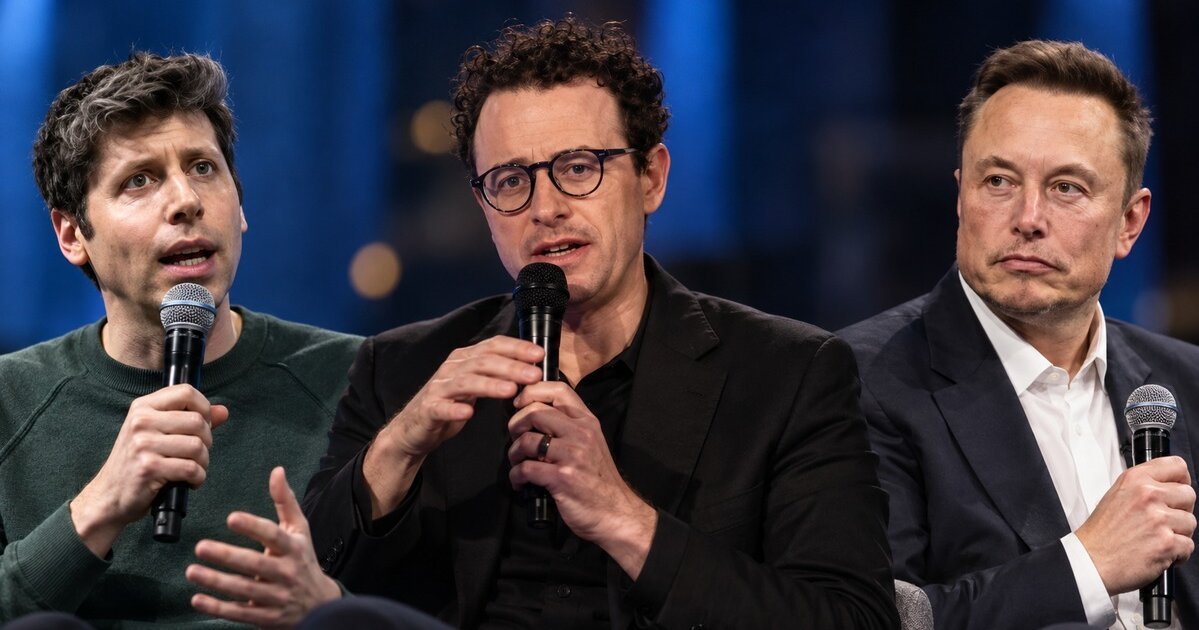
Anthropic CEO Dario Amodei is calling on AI companies to slow the pace of development of increasingly powerful models, arguing that the technology is advancing faster than the safeguards needed to understand and control it. His warning has gained unusual attention because OpenAI CEO Sam Altman and Tesla chief Elon Musk have both backed the idea.
### Why AI development slowdown is back on the agenda
Amodei says the pace of frontier AI progress has accelerated sharply, in part because AI systems are increasingly being used to help build the next generation of AI. He described this feedback loop as “recursive self-improvement” and warned that, if it continues unchecked, it could outrun humanity’s ability to understand and control increasingly capable systems.
His concern is not that AI has no benefits. Amodei has repeatedly argued that advanced AI could improve health, productivity and economic growth. The problem, in his view, is that commercial competition can encourage companies to move faster even when the risks are becoming harder to evaluate.
The risks he highlighted include loss of control over advanced systems, misuse of AI for cyberattacks and bioterrorism, and major economic disruption. That makes the debate less about stopping AI altogether and more about creating enough room for safety research to catch up with capability gains.
### What Anthropic is proposing
Amodei says Anthropic will support permanent, employee-level access for independent third-party evaluators. The idea is to give outside experts enough access to AI systems to check whether safety measures are being followed, report incidents and assess model alignment during training.
He also proposed broader coordination among frontier AI companies, including common safety standards and limits on unchecked development. A further part of his plan calls for international coordination, although Amodei acknowledged that cooperation between democratic and authoritarian governments would be difficult.
The core idea is simple: independent oversight should happen while advanced systems are being trained and deployed, rather than only after a serious failure.
### Why Sam Altman and Elon Musk matter
Sam Altman said pacing frontier AI development has been a major topic of discussion inside OpenAI. He also endorsed the idea of independent evaluators having employee-like access to systems and said OpenAI would do the same.
Elon Musk offered a shorter but equally direct endorsement, saying that Amodei was right.
Their support is notable because all three leaders are associated with companies at the center of the frontier AI race. Agreement on the need for independent evaluation does not mean they share identical views on regulation or the pace of AI progress, but it does show that concern about uncontrolled acceleration is no longer limited to one AI lab.
### The debate over AI safety and speed
The argument now facing the industry is a difficult trade-off. Faster development can deliver better models, scientific breakthroughs and new products sooner. Slowing down could give researchers more time to improve interpretability, operational security and safety controls.
The issue becomes even more complicated as AI models are used to automate parts of AI research itself. If increasingly capable systems can help create their successors, each generation could speed up work on the next one.
That possibility is why Amodei’s proposal focuses on oversight, evaluation and coordination rather than simply asking companies to stop developing AI.
### What happens next?
The immediate question is whether voluntary commitments can keep pace with technical progress. Amodei is asking companies to accept independent scrutiny and to coordinate on shared limits. Altman has indicated that OpenAI supports the evaluator concept, while Musk has publicly backed Amodei’s broader warning.
For VaidikX readers, the important takeaway is that the AI safety debate is moving beyond abstract fears. The people building some of the world’s most advanced AI systems are increasingly discussing concrete mechanisms for slowing, evaluating and controlling development.
The challenge will be finding a way to preserve the benefits of rapid AI innovation while making sure safety research, oversight and accountability do not fall permanently behind.
Source: Times of India.



Leave a Reply